Curious about what’s shaping today’s culinary buzz—from unexpected flavor pairings to smarter meal prep? This article dives straight into the techniques and ideas redefining modern kitchens, with a special focus on plant-based cooking innovations, fermentation methods, and creative ingredient spotlights. Whether you’re experimenting at home or refining your skills, you’ll find practical insights that match your search for fresh inspiration and reliable guidance.
We’ve analyzed emerging food trends, tested flavor fusion concepts, and explored time-honored fermentation techniques to separate passing fads from truly transformative approaches. The result is a focused, research-backed look at what’s working right now—and why.
Inside, you’ll discover how bold ingredient combinations elevate everyday meals, how fermentation can deepen flavor and boost versatility, and how strategic meal prep hacks save time without sacrificing taste. If you’re looking for actionable culinary ideas grounded in real-world testing and trend awareness, you’re in the right place.
Beyond Roasting: The New Frontier of Plant-Based Cooking
Plant-based home cooking often stops at steaming, sautéing, and roasting. While those methods are reliable, they rarely unlock deep, layered flavor. The real challenge is building complexity—meaning multiple taste notes unfolding at once—without animal fats or proteins. So, how do we bridge that gap?
Here’s the shift: plant-based cooking innovations focus on technique, not just ingredients. For example, consider:
- Fermentation—controlled microbial transformation that boosts umami.
- Emulsification—blending liquids and fats for creaminess.
- Maillard reaction—high-heat browning that creates savory depth.
In short, understanding “how” and “why” turns vegetables into unforgettable dishes.
Harnessing Fermentation for Unforgettable Umami
As plant-based innovations continue to reshape our culinary landscape, understanding the nuances of flavor—like balancing sweet, sour, salty, and umami—becomes essential for home cooks looking to elevate their dishes – for more details, check out our A Beginner’s Guide to Balancing Sweet, Sour, Salty, and Umami.
Fermentation is the quiet overachiever of the kitchen. It transforms simple ingredients into deeply savory powerhouses by encouraging beneficial microbes to break down sugars and proteins into flavor-packed compounds like glutamates—natural chemicals responsible for umami (the rich, savory taste often associated with aged cheese or mushrooms) (Journal of Agricultural and Food Chemistry, 2018). The benefit? Deeper flavor without extra salt or artificial additives.
For plant-based cooking innovations, this means no more flat, one-note dishes. Instead, you get layers—tangy, funky, complex notes that make vegetables taste crave-worthy (yes, even cabbage).
Technique Spotlight 1: Lacto-Fermentation
Lacto-fermentation uses salt to encourage lactic acid bacteria to thrive. To quick-ferment cabbage or carrots, toss sliced vegetables with 2% salt by weight, massage until juicy, then pack tightly into a jar. Submerge under their own brine and cover loosely. In 3–5 days at room temperature, you’ll taste bright acidity and subtle funk. The payoff? Better digestion, longer shelf life, and bold flavor in tacos, grain bowls, or sandwiches.
Technique Spotlight 2: Using Fermented Products
Miso, tempeh, and soy sauce aren’t just for soup or stir-fry. Whisk miso into salad dressings, blend soy sauce into caramel glazes, or crumble tempeh into pasta sauce for meaty depth. Fermented foods contain glutamates that enhance overall flavor perception (Frontiers in Microbiology, 2020). Translation: everything tastes fuller.
Actionable Tip: Miso-Mushroom Butter
Mash 4 tbsp vegan butter with 1 tbsp white miso, 1 tsp soy sauce, and 2 tbsp finely sautéed mushrooms. Chill. Spread on toast, melt into pasta, or finish roasted vegetables. Instant umami upgrade (weeknight dinner saved).
The Pressure Cooker’s Secret: Unlocking Meat-Like Textures
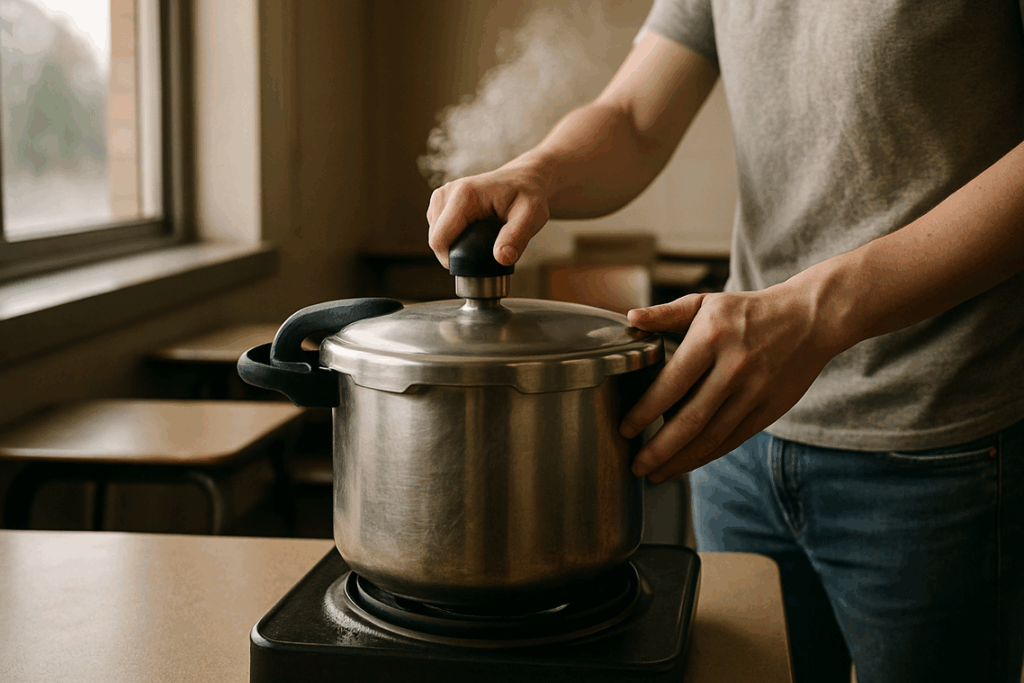
Most people treat the pressure cooker as a weeknight time-saver. But its real superpower? Texture manipulation. Instead of just cooking food faster, it transforms structure—turning fibrous plants into dense, satisfying bites that mimic slow-braised meat (without the eight-hour wait).
Here’s the science in simple terms: under high pressure, water boils above 212°F. That intense heat and steam force moisture deep into plant cell walls, breaking down tough fibers like cellulose and hemicellulose. The result is tender yet cohesive texture—less mush, more “pull” and chew. Think of it as controlled structural collapse.
Case Study 1: Jackfruit
Young green jackfruit is naturally stringy, but raw it’s stiff and spongy. Pressure cook it with seasoned broth for 10 minutes, quick release, and it shreds beautifully for tacos or sandwiches. Why does it work so well? The steam penetrates its dense core, loosening fibers while preserving strand integrity. Pro tip: sauté after shredding to evaporate excess moisture for crisp edges.
Case Study 2: Mushrooms & Seitan
King oyster mushrooms develop a firm, sliceable bite after 8 minutes at high pressure. Seitan becomes denser and steak-like in 15–20 minutes, especially when submerged halfway in broth to avoid sponginess.
Quick Guide:
- Jackfruit: 1 cup broth per 2 cups fruit – 10 min
- King oyster mushrooms: ½ cup liquid – 8 min
- Seitan: 1 cup broth – 15–20 min
These techniques showcase how plant-based cooking innovations rely on physics as much as flavor.
Flavor Infusion: The Science of Sous Vide and Oil Confit
Deep flavor isn’t magic—it’s controlled science. When you understand how heat, fat, and time interact, you can transform simple vegetables into layered, aromatic showstoppers.
Sous Vide for Vegetables
Sous vide (French for “under vacuum”) involves sealing food in an airtight bag and cooking it in a precisely controlled water bath. Because vegetables cook at exact temperatures—say, carrots at 85°C—you get even texture without overcooking. More importantly, vacuum-sealing forces herbs, citrus zest, or spices into direct contact with the vegetable’s surface, enhancing flavor penetration.
For example, fennel cooked sous vide with olive oil and thyme absorbs aromatics evenly, rather than just on the exterior. As a result, every bite tastes intentional. Some critics argue sous vide is too technical for home cooks. However, affordable immersion circulators have made it far more accessible (and far less intimidating than it sounds).
Plant-Based Confit
Confit means slow-poaching in fat at low heat. Traditionally used for meat preservation, it works beautifully for plant ingredients. Garlic cloves gently cooked in oil turn buttery and sweet. Cherry tomatoes collapse into jammy bursts. Mushrooms become silky and deeply savory.
To try it:
- Submerge ingredients fully in oil
- Keep heat between 85–95°C
- Cook until tender but not browned
Meal Prep Hack
Make a batch of confit garlic or tomatoes and refrigerate them in their oil. Throughout the week, stir them into sauces, blend into dressings, or spread onto toast. Pro tip: Use the infused oil as a finishing drizzle—it’s liquid flavor. Techniques like these align with plant-based cooking innovations and even echo trends in sustainable cooking practices gaining popularity in 2026.
Dehydration and Powders: Creating Concentrated Flavor Boosters
Dehydration isn’t just about preservation—it’s about concentration. By slowly removing water, you intensify flavor compounds (the chemical elements responsible for taste and aroma). Some argue fresh is always better, and yes, a ripe tomato is magic. However, dried tomato powder delivers a punchy tang you simply can’t get from raw slices.
To start, dehydrate mushrooms, tomatoes, or even vegetable scraps in a low oven (around 170°F) or a dehydrator until brittle. Then grind into fine powders. Mushroom powder adds deep umami (savory richness), while tomato powder brightens soups or spice rubs.
Sprinkle as a finishing dust, whisk into broths, or blend into seasonings. Next? Experiment with plant-based cooking innovations like carrot-top powder—and reduce waste while you’re at it.
Fermentation builds deep umami through controlled microbial activity, creating tangy complexity and gut-friendly benefits. Pressure cooking uses sealed steam at 15psi to soften chickpeas in minutes, preserving nutrients while delivering silky textures. Flavor infusion techniques like cold-smoked oils or spice-steeped broths drive aroma into every bite. Dehydration at low temperatures concentrates sweetness in tomatoes or carrots, transforming chew and shelf life.
These features aren’t about imitation; they’re innovation. Plant ingredients become their boldest selves when you apply plant-based cooking innovations with intention.
Choose one method this week—try pressure cooking lentils or fermenting cabbage—and taste the upgrade firsthand for yourself.
Bring More Creativity and Confidence Into Your Kitchen
You came here looking for fresh culinary inspiration—new flavor combinations, smarter prep strategies, and modern techniques to elevate your meals. Now you have practical insights you can apply right away, from fermentation fundamentals to bold ingredient pairings and plant-based cooking innovations that keep your menu exciting.
If you’ve ever felt stuck making the same dishes on repeat or unsure how to experiment without wasting time and ingredients, you’re not alone. Creative cooking can feel overwhelming without the right guidance. But with the right techniques and flavor knowledge, your kitchen becomes a space for discovery instead of stress.
Now it’s time to take action. Start by trying one new fusion concept this week or incorporating a fermentation method into your meal prep routine. Explore more flavor spotlights and hands-on techniques to keep building your confidence.
Ready to transform everyday meals into unforgettable experiences? Dive deeper into our expert-backed culinary insights and start cooking smarter, bolder, and more creatively today.
 Head of Culinary Content & Research
Adrianestor Beasley has opinions about culinary buzz. Informed ones, backed by real experience — but opinions nonetheless, and they doesn't try to disguise them as neutral observation. They thinks a lot of what gets written about Culinary Buzz, Flavor Fusion Concepts, Ingredient Spotlight Ideas is either too cautious to be useful or too confident to be credible, and they's work tends to sit deliberately in the space between those two failure modes.
Reading Adrianestor's pieces, you get the sense of someone who has thought about this stuff seriously and arrived at actual conclusions — not just collected a range of perspectives and declined to pick one. That can be uncomfortable when they lands on something you disagree with. It's also why the writing is worth engaging with. Adrianestor isn't interested in telling people what they want to hear. They is interested in telling them what they actually thinks, with enough reasoning behind it that you can push back if you want to. That kind of intellectual honesty is rarer than it should be.
What Adrianestor is best at is the moment when a familiar topic reveals something unexpected — when the conventional wisdom turns out to be slightly off, or when a small shift in framing changes everything. They finds those moments consistently, which is why they's work tends to generate real discussion rather than just passive agreement.
Head of Culinary Content & Research
Adrianestor Beasley has opinions about culinary buzz. Informed ones, backed by real experience — but opinions nonetheless, and they doesn't try to disguise them as neutral observation. They thinks a lot of what gets written about Culinary Buzz, Flavor Fusion Concepts, Ingredient Spotlight Ideas is either too cautious to be useful or too confident to be credible, and they's work tends to sit deliberately in the space between those two failure modes.
Reading Adrianestor's pieces, you get the sense of someone who has thought about this stuff seriously and arrived at actual conclusions — not just collected a range of perspectives and declined to pick one. That can be uncomfortable when they lands on something you disagree with. It's also why the writing is worth engaging with. Adrianestor isn't interested in telling people what they want to hear. They is interested in telling them what they actually thinks, with enough reasoning behind it that you can push back if you want to. That kind of intellectual honesty is rarer than it should be.
What Adrianestor is best at is the moment when a familiar topic reveals something unexpected — when the conventional wisdom turns out to be slightly off, or when a small shift in framing changes everything. They finds those moments consistently, which is why they's work tends to generate real discussion rather than just passive agreement.