
Craving something bold, unexpected, and unforgettable? The rise of latin asian flavor fusion is redefining modern cuisine, blending fiery Latin spices with the deep, savory richness of Asian umami. This dynamic movement is behind some of today’s most exciting dishes—but knowing where to begin can feel overwhelming. Which flavors actually complement each other? What ingredients create harmony instead of chaos? This guide breaks down the core principles that make these cuisines such a natural match, highlights essential ingredients to experiment with, and shares inspiring dish ideas so you can confidently explore this vibrant culinary frontier.
The Philosophy of Fusion: Why These Two Worlds Collide
At first glance, Latin and Asian cuisines seem worlds apart. Different continents, different histories. But when you break them down to their core flavor principles, the overlap becomes clear.
Both culinary traditions rely on balance—specifically the interplay of sweet, sour, salty, spicy, and umami (a savory depth often described as “meaty” or deeply satisfying). Think of a Thai papaya salad and a Mexican ceviche. Different ingredients, same balancing act.
The Role of Acidity and Freshness
Acidity simply means a bright, tangy taste that cuts through richness. In both traditions, lime and vinegar do the heavy lifting. Fresh herbs like cilantro add lift and aroma.
• Lime sharpens tacos and noodle bowls alike
• Vinegar balances adobo and pickled vegetables
• Cilantro adds a fresh, almost citrusy finish
Without acidity, dishes feel flat (like a song missing its chorus).
A Tradition of Fermentation
Fermentation is the controlled transformation of food by beneficial microbes. It creates complexity. Latin cultures have fermented drinks and sourdoughs; Asian kitchens rely on kimchi, miso, and soy sauce. These ingredients build deep flavor bridges—making latin asian flavor fusion feel logical, not forced.
The Culture of Communal Eating
Both cultures celebrate shared plates and street food. When food is built for gathering, blending traditions feels natural—almost inevitable.
The Flavor Bridge: Essential Ingredients & Perfect Pairings
Spotlight on Chiles
Chipotles bring smoky, dried-jalapeño heat, while aji amarillo delivers bright, fruity spice (think tropical sunshine with a kick). On the Asian side, gochujang—a fermented Korean chili paste blending red pepper, rice, and soybeans—offers sweet, savory fire, while Thai chiles hit sharp and immediate. Pairing gochujang with adobo creates a sweet-smoky glaze that clings beautifully to ribs or grilled tofu. The benefit? Layered heat that tastes intentional, not chaotic. You’re building complexity instead of just turning up the Scoville scale (your guests will notice).
The Citrus Connection
Yuzu and calamansi lean floral and aromatic, whereas lime and sour orange provide direct, puckering acidity. Because acidity balances fat and salt, these fruits can often swap roles in marinades and ceviches. A yuzu-spiked leche de tigre brightens seafood just as effectively as lime. The payoff is flexibility: you can adapt recipes to what’s fresh while keeping vibrant flavor intact.
Umami Bombs
Umami—known as the “fifth taste” (Ikeda, 1908)—signals savory depth. Roasted tomatoes and aged cheeses like Cotija deliver it in Latin kitchens. Miso, soy sauce, and dried shiitakes amplify it in Asian cooking. Imagine miso-braised carnitas: fermented soybean paste intensifies pork richness while adding subtle sweetness. That’s latin asian flavor fusion working for you, giving dishes steakhouse-level savoriness without extra meat.
Starch Staples as Canvases
Corn tortillas, arepas, sushi rice, and steamed bao act as neutral carriers for bold toppings. A pork belly bao with salsa criolla proves it: fatty, fluffy, acidic, crunchy. The advantage? Endless remix potential (it’s culinary Lego for grown-ups).
On the Menu: Iconic Fusion Dishes You Need to Taste
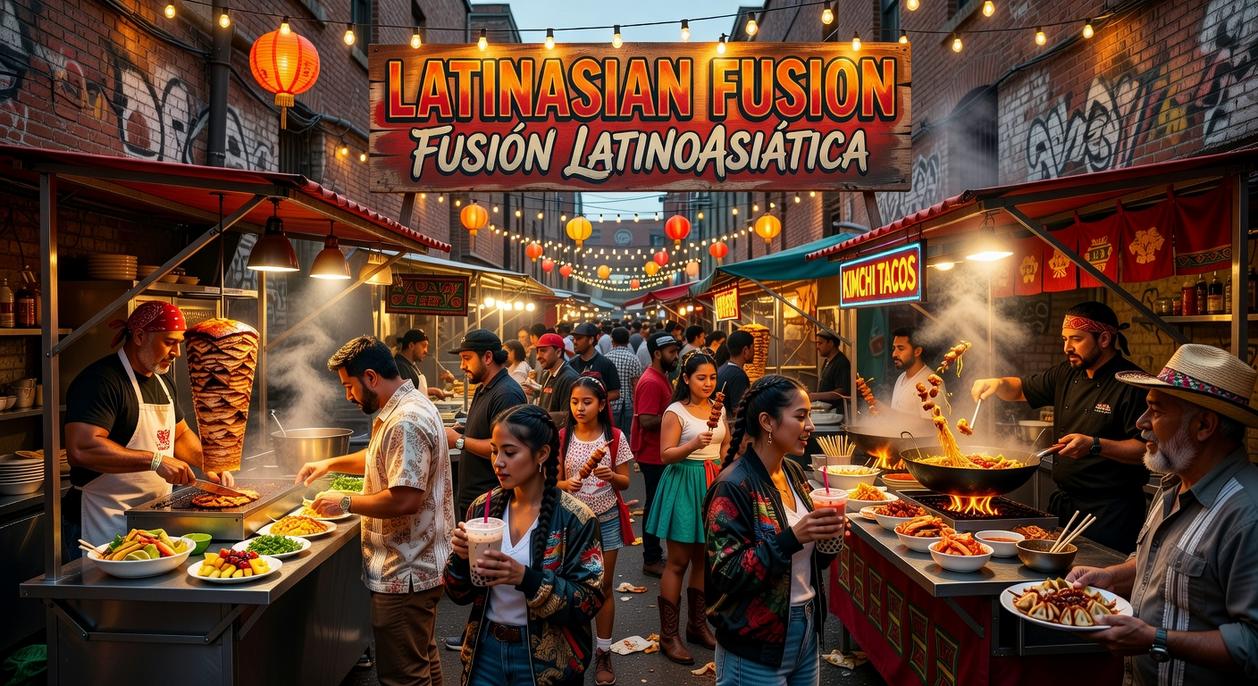
Fusion cuisine is like a culinary duet—two distinct voices harmonizing into something bigger than either could achieve alone. When done right, it’s not confusion; it’s choreography. (Think of it as the Avengers of your pantry.)
Kimchi Tacos
Kimchi—Korea’s staple of fermented, chili-laced cabbage—brings crunch, heat, and tang. That fermented bite slices through the richness of grilled bulgogi or slow-cooked carnitas like a squeeze of citrus through fatty duck. Wrapped in a warm corn tortilla, the contrast feels electric. The tortilla is the stage, the meat is the bassline, and kimchi is the electric guitar riff that wakes everything up.
Lomo Saltado Sushi Rolls
Lomo saltado, a Peruvian stir-fry of beef, soy sauce, vinegar, onions, and tomatoes, already carries East Asian influence. Rolling it into sushi feels less like a stretch and more like destiny. The soy-vinegar glaze seeps into seasoned rice, while aji amarillo aioli adds creamy heat. It’s a savory maki roll that tastes like a passport stamp—proof that borders blur beautifully in latin asian flavor fusion.
Ceviche with a Yuzu-Ponzu Marinade
Traditional ceviche “cooks” fish in lime juice through acidity. Swap lime for yuzu and ponzu—citrus meets soy—with a whisper of ginger, and suddenly the marinade feels tailored, like trading sneakers for a kimono-inspired jacket. The brightness remains, but umami deepens. For more on mastering these layers, explore a beginners guide to balancing sweet sour salty and umami.
Arepas with Glazed Pork Belly
Arepas—crispy cornmeal cakes—cradle miso-glazed pork belly like a golden envelope. Add quick-pickled daikon and carrot slaw, and you get crunch and acidity cutting through luscious fat. It’s balance, wrapped in corn, proving opposites don’t just attract—they feast.
Your First Fusion Creation: A Simple Marinade Hack
Some purists argue you shouldn’t mix culinary traditions—that soy sauce belongs in East Asia and lime belongs in Latin kitchens. I get it. Tradition matters. But flavor is a language, and sometimes the best conversations happen when accents blend. That’s the magic of latin asian flavor fusion.
The Go-To Fusion Marinade Recipe
- Base: 1/4 cup soy sauce (deep, savory umami—think miso soup depth)
- Acidity: Juice of 2 limes (bright, citrusy lift)
- Sweetness: 1 tbsp honey or brown sugar
- Spice: 1 tbsp gochujang or sriracha
- Aromatics: 2 cloves minced garlic, 1 tsp grated ginger
- Herbal Notes: 1/4 cup chopped cilantro (the bridge that ties it together)
Whisk and marinate chicken, pork, or tofu for at least 30 minutes (overnight is better—pro tip). On Sunday, prep a batch and portion it out. Use it for tacos Monday, rice bowls Wednesday, salads Friday. Same base, different vibe—like a culinary remix album.
• CAPS
•
•
As you explore the vibrant fusion of Latin and Asian flavors in your cooking, you might also be intrigued to learn how unique ingredients like kayudapu can boost your dish’s nutritional profile, especially with its rich iron content discussed in our article, “Is Kayudapu Rich in Iron?
Start Your Own Flavor Adventure
You came here to understand the heart of latin asian flavor fusion—the balance of acidity, spice, and umami that makes every bite unforgettable. Now you know the philosophy and the flavors behind it. Don’t let bland meals hold you back. Try the marinade tonight and start crafting bold, unforgettable dishes in your own kitchen.
 Head of Culinary Content & Research
Adrianestor Beasley has opinions about culinary buzz. Informed ones, backed by real experience — but opinions nonetheless, and they doesn't try to disguise them as neutral observation. They thinks a lot of what gets written about Culinary Buzz, Flavor Fusion Concepts, Ingredient Spotlight Ideas is either too cautious to be useful or too confident to be credible, and they's work tends to sit deliberately in the space between those two failure modes.
Reading Adrianestor's pieces, you get the sense of someone who has thought about this stuff seriously and arrived at actual conclusions — not just collected a range of perspectives and declined to pick one. That can be uncomfortable when they lands on something you disagree with. It's also why the writing is worth engaging with. Adrianestor isn't interested in telling people what they want to hear. They is interested in telling them what they actually thinks, with enough reasoning behind it that you can push back if you want to. That kind of intellectual honesty is rarer than it should be.
What Adrianestor is best at is the moment when a familiar topic reveals something unexpected — when the conventional wisdom turns out to be slightly off, or when a small shift in framing changes everything. They finds those moments consistently, which is why they's work tends to generate real discussion rather than just passive agreement.
Head of Culinary Content & Research
Adrianestor Beasley has opinions about culinary buzz. Informed ones, backed by real experience — but opinions nonetheless, and they doesn't try to disguise them as neutral observation. They thinks a lot of what gets written about Culinary Buzz, Flavor Fusion Concepts, Ingredient Spotlight Ideas is either too cautious to be useful or too confident to be credible, and they's work tends to sit deliberately in the space between those two failure modes.
Reading Adrianestor's pieces, you get the sense of someone who has thought about this stuff seriously and arrived at actual conclusions — not just collected a range of perspectives and declined to pick one. That can be uncomfortable when they lands on something you disagree with. It's also why the writing is worth engaging with. Adrianestor isn't interested in telling people what they want to hear. They is interested in telling them what they actually thinks, with enough reasoning behind it that you can push back if you want to. That kind of intellectual honesty is rarer than it should be.
What Adrianestor is best at is the moment when a familiar topic reveals something unexpected — when the conventional wisdom turns out to be slightly off, or when a small shift in framing changes everything. They finds those moments consistently, which is why they's work tends to generate real discussion rather than just passive agreement.