
If you’ve been curious about cooking with miso, you’re likely looking for more than just soup recipes. Miso is a deeply flavorful, fermented ingredient that can transform everything from marinades and dressings to desserts and weeknight meal prep. This article is designed to help you understand how to use miso confidently—whether you’re experimenting with flavor fusion, exploring fermentation techniques, or simply trying to add more umami to everyday dishes.
We break down the different types of miso, how their flavors vary, and when to use each one for the best results. You’ll also discover practical tips to avoid common mistakes, plus creative ways to incorporate miso into modern recipes without overpowering your dish.
Our guidance is grounded in hands-on culinary testing, fermentation knowledge, and ongoing exploration of ingredient-focused cooking trends—so you can trust that the techniques and ideas shared here are practical, reliable, and built for real kitchens.
Umami—the savory, mouth-filling “fifth taste”—is what makes you close your eyes and say wow. Miso is its overachieving valedictorian. Yet many home cooks stash a tub in the fridge, using it only for soup and giving it side-eye (it’s potent, after all). Here’s the secret: fermentation transforms soybeans and salt into layered glutamates, the compounds behind umami (see Ikeda, 1908). Understanding that science makes cooking with miso far less mysterious and far more fun. Try:
- Whisking it into butter for corn.
- Stirring into caramel for salty depth.
Pro tip: start small; you can always add more. Trust me.
The Soul of Japanese Flavor: What Exactly Is Miso?
Miso is a traditional Japanese seasoning made by fermenting soybeans with salt and kōji (Aspergillus oryzae), a cultivated fungus that kickstarts transformation. Think of kōji as the quiet overachiever of the culinary world (it does the work, takes none of the credit). Over time, this mixture matures into a paste that ranges from sweet and mild to deeply savory and intense.
The magic lies in fermentation—a controlled process where microorganisms break down proteins into amino acids, including glutamate, the compound responsible for umami. Umami, often called the “fifth taste,” delivers that savory depth you recognize in Parmesan or slow-simmered broth (yes, it’s that addictive). Some argue miso is just salty soybean paste. But that misses the point: fermentation creates complexity you simply can’t fake.
Core ingredients include soybeans, salt, and kōji, often paired with rice or barley. Short fermentation yields light, sweet white miso; longer aging produces darker, bolder varieties. PRO TIP: Start with white miso for dressings and marinades, then graduate to red miso for stews.
Unpasteurized miso contains probiotics that may support gut health, along with protein and minerals (Harvard T.H. Chan School of Public Health). For beginners, try cooking with miso in soups or compound butter. START SIMPLE, TASTE OFTEN, AND ADJUST.
Shiro miso, often called white miso, is fermented for a shorter time, giving it a sweet, mild flavor with a creamy finish. (Think of it as the vanilla latte of the miso bar.) Because its salt level is lower, it shines in dressings, light sauces, and marinades for fish like Pacific cod or halibut, staples in West Coast kitchens.
Shinshu miso, or yellow miso, sits squarely in the ALL-PURPOSE camp. Fermented longer than shiro but shorter than red, it delivers a balanced, earthy profile chefs describe as rounded umami. In restaurant prep kitchens, it is the go-to for miso soup, glazes on roasted vegetables, and everyday cooking with miso when you want depth without overpowering a dish.
Aka miso, the bold red variety, undergoes long fermentation, developing a deep reddish color and salty, pungent punch. It is ideal for hearty braises, rich ramen broths, and marinades for red meat (short ribs especially love it).
Awase miso is a blend—usually red and white—crafted for versatility. If you’re unsure which tub to grab, start here. Choose lighter miso for delicate proteins, darker for robust dishes. For more global tang comparisons, see why sumac is the tangy spice your pantry needs in winter.
Mastering the Classics: Three Essential Miso Recipes
If you’re serious about cooking with miso, start with the foundations. I recommend mastering these three recipes before experimenting—they teach technique, balance, and restraint.
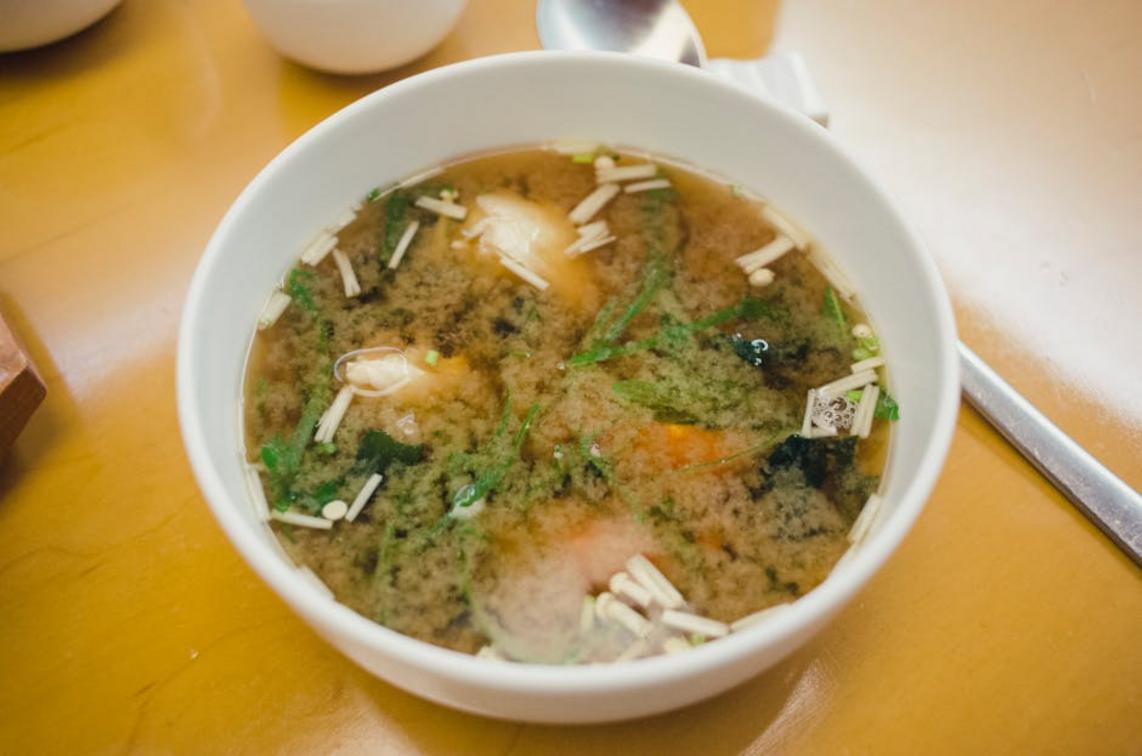
The Perfect Miso Soup
Begin with proper dashi (a Japanese soup stock made from kombu seaweed and bonito flakes). Steep, don’t boil, to extract clean umami. Once your broth is ready, whisk miso with a ladle of warm dashi before returning it to the pot. Never boil miso—high heat dulls its nuanced flavor and can destroy beneficial probiotics (as noted by the National Institutes of Health on fermented foods). Pro tip: add tofu and scallions at the very end for texture contrast.
Quick Miso-Glazed Salmon
For weeknights, mix miso with mirin and a touch of sugar. Brush over salmon and broil until caramelized. The sugars in miso create that glossy crust—think of it as the culinary equivalent of a perfect golden tan. I recommend lining your pan with foil for easy cleanup.
Creamy Miso-Ginger Dressing
Whisk white miso with grated ginger, rice vinegar, and sesame oil. Miso acts as an emulsifier (it helps oil and water blend smoothly), giving body without heavy cream. Try it on:
- Crisp cabbage slaw
- Grain bowls
- Roasted carrots
Start here. Then improvise.
Flavor Fusion: Unexpected Ways to Use Miso
I’ll say it: miso is the most UNDERRATED secret weapon in your fridge. Most people pigeonhole it into soup, but cooking with miso opens up a world of savory depth that feels almost unfair (in a good way).
Boost Savory Sauces
Stir a spoonful into tomato pasta sauce, gravy, or chili. Miso is a fermented soybean paste—fermentation means microbes break ingredients down, creating deeper flavor compounds. The result? Extra umami (that rich, savory “fifth taste”). It won’t scream “miso,” but your sauce will taste fuller, like it simmered all day.
Elevate Your Marinades
Miso makes an incredible base for marinades:
• White miso + garlic + honey + soy sauce for chicken
• Red miso + ginger + rice vinegar for pork
• Miso + sesame oil + maple syrup for tofu
It caramelizes beautifully on the grill (those crispy edges are everything).
Surprising Sweets
Yes, dessert. Try miso caramel: melt sugar, whisk in butter and cream, then add 1 teaspoon white miso. The salty-savory contrast sharpens the sweetness—like salted caramel’s cooler cousin.
Meal Prep Hack
Mash 1 tablespoon miso into ½ cup softened butter. Spread it on toast, corn, or melt over steak. Pro tip: refrigerate in a log so you can slice flavor on demand.
Miso is far more than a soup starter; it’s a fermented soybean paste aged for months or even years, developing deep umami—the savory “fifth taste.” If you’ve felt unsure about using this powerful paste, you’re not alone. Its salty intensity can seem intimidating at first. However, once you understand the basics—white miso for sweetness, yellow for balance, red for bold depth—confidence follows. By mastering a few techniques, like whisking it into dressings or finishing roasted vegetables off heat, you unlock serious flavor. In other words, cooking with miso becomes effortless. Pick one new recipe this week and start experimenting today.
Bring More Depth to Your Kitchen with Miso
You came here to understand how miso can transform your meals—and now you have the tools to do exactly that. From balancing sweet and savory flavors to unlocking rich umami depth, you’ve seen how cooking with miso can elevate everything from marinades to soups and even unexpected dishes like dressings and desserts.
If you’ve ever struggled with flat, one-dimensional flavors or felt stuck repeating the same seasoning routine, miso is your way out. Its complexity solves the common pain point of bland home cooking by adding instant depth without complicated techniques.
Now it’s your move. Start experimenting with cooking with miso in one dish this week—swap it into a sauce, whisk it into a glaze, or stir it into roasted vegetables. Explore new pairings, test different varieties, and taste the difference for yourself.
Home cooks everywhere are rediscovering bold, balanced flavor through simple fermentation techniques. Don’t let your meals stay predictable. Open the fridge, grab that tub of miso, and turn your next dish into something unforgettable.
 Founder & Culinary Innovation Director
Ask Syldric Rendall how they got into meal prep hacks and you'll probably get a longer answer than you expected. The short version: Syldric started doing it, got genuinely hooked, and at some point realized they had accumulated enough hard-won knowledge that it would be a waste not to share it. So they started writing.
What makes Syldric worth reading is that they skips the obvious stuff. Nobody needs another surface-level take on Meal Prep Hacks, Flavor Fusion Concepts, Culinary Buzz. What readers actually want is the nuance — the part that only becomes clear after you've made a few mistakes and figured out why. That's the territory Syldric operates in. The writing is direct, occasionally blunt, and always built around what's actually true rather than what sounds good in an article. They has little patience for filler, which means they's pieces tend to be denser with real information than the average post on the same subject.
Syldric doesn't write to impress anyone. They writes because they has things to say that they genuinely thinks people should hear. That motivation — basic as it sounds — produces something noticeably different from content written for clicks or word count. Readers pick up on it. The comments on Syldric's work tend to reflect that.
Founder & Culinary Innovation Director
Ask Syldric Rendall how they got into meal prep hacks and you'll probably get a longer answer than you expected. The short version: Syldric started doing it, got genuinely hooked, and at some point realized they had accumulated enough hard-won knowledge that it would be a waste not to share it. So they started writing.
What makes Syldric worth reading is that they skips the obvious stuff. Nobody needs another surface-level take on Meal Prep Hacks, Flavor Fusion Concepts, Culinary Buzz. What readers actually want is the nuance — the part that only becomes clear after you've made a few mistakes and figured out why. That's the territory Syldric operates in. The writing is direct, occasionally blunt, and always built around what's actually true rather than what sounds good in an article. They has little patience for filler, which means they's pieces tend to be denser with real information than the average post on the same subject.
Syldric doesn't write to impress anyone. They writes because they has things to say that they genuinely thinks people should hear. That motivation — basic as it sounds — produces something noticeably different from content written for clicks or word count. Readers pick up on it. The comments on Syldric's work tend to reflect that.