If you’ve ever wondered whether making homemade pasta from scratch is really worth the effort, you’re in the right place. Many home cooks are curious about the process but feel intimidated by the technique, the tools, or the time involved. This article is designed to walk you through exactly what you need to know—why it works, how to get the texture just right, and which small details make the biggest difference in flavor and structure.
We break down the essentials step by step, from choosing the right flour to mastering kneading and resting times, so you can avoid common mistakes and get consistent results. Along the way, you’ll also learn how subtle adjustments in hydration, shaping, and cooking time can transform your final dish.
Our guidance is rooted in hands-on kitchen testing, culinary research, and time-tested techniques used in traditional pasta-making. By the end, you’ll not only understand the process—you’ll feel confident turning a few simple ingredients into pasta that rivals your favorite restaurant.
From Flour and Egg to Culinary Magic
As you master the art of homemade pasta from scratch, don’t forget to explore how to harmonize your dishes with the perfect balance of sweet, sour, salty, and umami for a truly unforgettable culinary experience – for more details, check out our A Beginner’s Guide to Balancing Sweet, Sour, Salty, and Umami.
Imagine tearing into pasta so tender it barely resists the bite—nothing like the plastic snap of boxed noodles. While some argue machines are essential, the truth is simpler. With homemade pasta from scratch, you only need flour, eggs, and intention.
Here’s the traditional path competitors often skip explaining:
- Build a flour well to control hydration (why: gradual mixing prevents toughness).
- Knead until elastic—this develops gluten, the protein network giving structure.
- Rest the dough so strands relax for easy shaping.
- Hand-roll thinly for delicate texture.
Cook briefly in salted water—think al dente, not mushy (yes, like an Italian grandma insisting nearby).
Ingredient Spotlight: Flour, Eggs, and Ratios
First, let’s talk flour. Italian “00” flour is finely milled (meaning the grind is ultra-soft) and typically moderate in protein, which helps create silky, tender pasta. All-purpose flour has slightly higher protein (around 10–12%, per King Arthur Baking), producing more chew. Higher protein equals more gluten—the elastic network that gives pasta structure. If you’re a beginner, I recommend starting with all-purpose flour; it’s forgiving and widely available.
Next, eggs. The yolk brings fat and color (that golden glow you see in northern Italian pasta), while the white adds protein and structure. Northern regions favor egg-rich doughs—luxurious and tender. Southern styles often skip eggs, using water for a firmer, rustic bite. Think delicate tagliatelle versus hearty orecchiette (Batman has Robin; flour has eggs).
Finally, ratios. Start with 100g flour to 1 large egg per person. If it’s humid, add a dusting more flour. Pro tip: when making homemade pasta from scratch, adjust slowly—dough should feel like soft Play-Doh, not sticky chaos.
The Knead for Technique: Creating the Perfect Dough
I used to think dough was forgiving. Toss flour and eggs together, knead a little, hope for magic. What I got instead was sticky chaos or pasta tough enough to survive a zombie apocalypse. Here’s what actually works.
1. The Well Method
Pour your flour onto a clean surface and shape it into a mound. Create a crater in the center—this is your well (a hollow space that holds wet ingredients). Crack eggs into the middle. Using a fork, gently whisk the eggs, slowly pulling flour from the inner walls. The key mistake I made? Rushing. If you break the wall too soon, the eggs escape (and you’ll be chasing yolk across the counter). Move gradually until a shaggy dough forms.
2. The Kneading Process
Now the workout. Push the dough forward with the heel of your hand, fold it back over itself, then turn it slightly. Repeat for 8–10 minutes. At first, it feels rough and lumpy. Then it transforms—smooth, elastic, almost like a baby’s bottom. That elasticity comes from gluten (proteins that create structure when worked). I once stopped at five minutes and paid for it with brittle sheets when making homemade pasta from scratch.
3. The Crucial Rest
Wrap tightly in plastic and let it rest at least 30 minutes at room temperature. Resting allows gluten to relax, making rolling easier. Skip this, and the dough snaps back stubbornly (ask me how I know). For deeper kitchen fundamentals, revisit .
Shaping by Hand: Three Timeless Pasta Forms
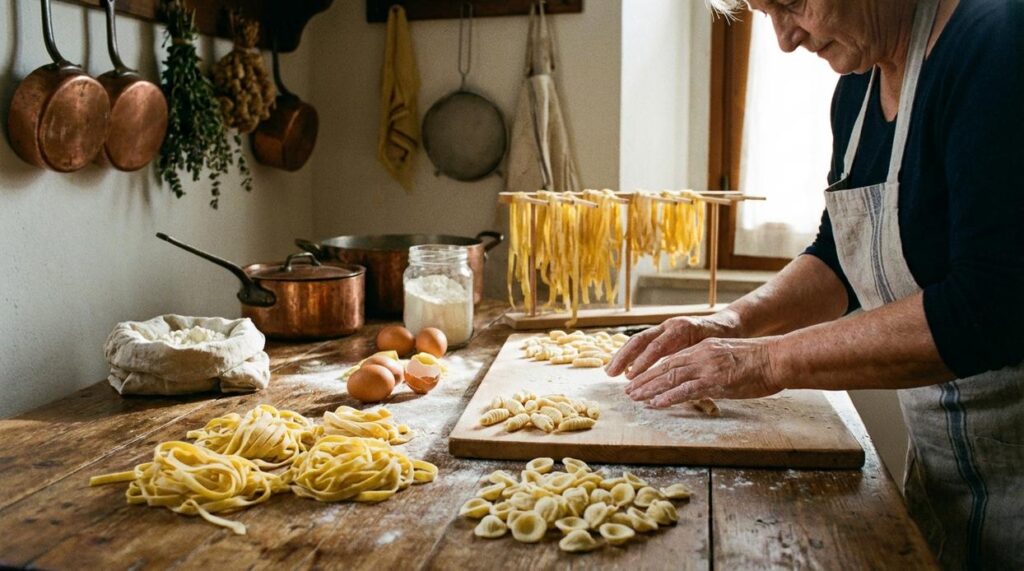
There’s something grounding about shaping pasta with your hands. It slows you down (in a good way) and turns dough into dinner with nothing more than touch and rhythm. If you’ve mastered homemade pasta from scratch, the next natural question is: what shapes should you try first? Let’s start with three classics.
Technique 1 – Orecchiette (“Little Ears”)
First, roll your dough into a rope about 1/2 inch thick. Cut into small nuggets. Using a butter knife or your thumb, drag each piece across your board so it curls, then flip it over your thumb to form a tiny cup. The rough side grabs sauce—think sausage and broccoli rabe. If they look imperfect, good. Rustic is the point.
Technique 2 – Pici (Thick Spaghetti)
Next, pinch off a small piece of dough and roll it between your palms, then against the counter, stretching outward as you move. Work from the center out to keep thickness even.
- Keep your pressure light and consistent
- Dust lightly with flour to prevent sticking
- Aim for strands about the width of a pencil
Consistency matters because even strands cook evenly (no one likes a mushy-meets-chewy surprise).
Technique 3 – Farfalle (“Butterflies”)
Finally, roll dough thin and cut into small squares or rectangles. Pinch firmly at the center to create the bow tie. This is beginner-friendly and great for creamy or tomato sauces.
So what’s next? Consider how sauce pairs with shape. Orecchiette loves chunky textures, pici shines with rich ragù, and farfalle handles lighter cream beautifully. Once you see pasta as architecture for sauce, you’ll never look at a noodle the same way.
The Final Transformation: Cooking and Serving
At last, the moment of truth: cooking your homemade pasta from scratch. The good news? It cooks fast—typically 2–4 minutes. That means dinner goes from pot to plate quicker than scrolling for takeout. Once the noodles float, they’re ready (yes, it’s that simple). This speed preserves their tender bite, giving you a texture that boxed pasta just can’t replicate.
First, salt your water “like the sea.” In other words, generously. This seasons the pasta from the inside out, so every bite tastes complete—not bland and begging for sauce. Skimp here, and no topping can fully fix it.
Then, keep sauces simple. Brown butter and sage adds nutty depth. Cacio e pepe delivers creamy, peppery comfort. A fresh tomato and basil sauce keeps things bright and balanced. Why overwhelm something you crafted by hand?
Ultimately, you get cleaner flavors, better texture, and a restaurant-level dish made in your own kitchen.
Creating delicious, authentic pasta doesn’t require fancy gadgets or a marble countertop. It requires intention, good flour, fresh eggs, and attention to detail. If you’ve felt intimidated, let that go. The process is straightforward when you focus on feel over fear.
Remember, homemade pasta from scratch succeeds because you understand why each step matters: kneading builds gluten (the protein network that gives structure), resting relaxes it, shaping defines texture.
Try:
- Use 00 flour for silkier strands.
- Rest the dough at least 30 minutes.
- Cut shapes that hold your favorite sauce.
Trust your hands—shouldn’t dinner feel satisfying?
You came here to master the art of homemade pasta from scratch—and now you understand the techniques, ingredients, and small details that make all the difference. From flour selection to kneading, resting, rolling, and pairing with the right sauces, you’ve seen how each step transforms simple ingredients into something unforgettable.
The frustration with pasta that turns out too tough, too sticky, or lacking flavor doesn’t have to continue. With the right method and a little patience, you can consistently create homemade pasta from scratch that’s tender, balanced, and deeply satisfying.
Now it’s time to take action. Don’t just read about it—clear your counter, measure your flour, and start kneading. If you want more flavor-forward techniques, fermentation insights, and chef-level meal prep hacks, explore our latest guides and step-by-step tutorials. Thousands of home cooks rely on our proven methods to level up their kitchen game.
Bring Real Flavor Back to Your Kitchen
Stop settling for store-bought shortcuts that never quite deliver. Start making pasta that tastes fresh, vibrant, and completely your own. Dive into our expert-backed recipes and practical kitchen strategies today—and turn your next meal into something truly memorable.
 Founder & Culinary Innovation Director
Ask Syldric Rendall how they got into meal prep hacks and you'll probably get a longer answer than you expected. The short version: Syldric started doing it, got genuinely hooked, and at some point realized they had accumulated enough hard-won knowledge that it would be a waste not to share it. So they started writing.
What makes Syldric worth reading is that they skips the obvious stuff. Nobody needs another surface-level take on Meal Prep Hacks, Flavor Fusion Concepts, Culinary Buzz. What readers actually want is the nuance — the part that only becomes clear after you've made a few mistakes and figured out why. That's the territory Syldric operates in. The writing is direct, occasionally blunt, and always built around what's actually true rather than what sounds good in an article. They has little patience for filler, which means they's pieces tend to be denser with real information than the average post on the same subject.
Syldric doesn't write to impress anyone. They writes because they has things to say that they genuinely thinks people should hear. That motivation — basic as it sounds — produces something noticeably different from content written for clicks or word count. Readers pick up on it. The comments on Syldric's work tend to reflect that.
Founder & Culinary Innovation Director
Ask Syldric Rendall how they got into meal prep hacks and you'll probably get a longer answer than you expected. The short version: Syldric started doing it, got genuinely hooked, and at some point realized they had accumulated enough hard-won knowledge that it would be a waste not to share it. So they started writing.
What makes Syldric worth reading is that they skips the obvious stuff. Nobody needs another surface-level take on Meal Prep Hacks, Flavor Fusion Concepts, Culinary Buzz. What readers actually want is the nuance — the part that only becomes clear after you've made a few mistakes and figured out why. That's the territory Syldric operates in. The writing is direct, occasionally blunt, and always built around what's actually true rather than what sounds good in an article. They has little patience for filler, which means they's pieces tend to be denser with real information than the average post on the same subject.
Syldric doesn't write to impress anyone. They writes because they has things to say that they genuinely thinks people should hear. That motivation — basic as it sounds — produces something noticeably different from content written for clicks or word count. Readers pick up on it. The comments on Syldric's work tend to reflect that.