Your knife is the most important tool in your kitchen—and mastering it changes everything. This guide shows you how to transform your cooking by developing the essential knife skills professionals rely on every day. If you struggle with slow prep work, uneven cuts, or a lack of confidence when recipes call for precision, you’re not alone. We break down the core techniques that solve these common problems, drawing from real-world professional kitchen experience where speed and accuracy matter. By the end, you’ll have a clear, practical framework for holding, using, and caring for your knife so you can cook faster, safer, and with total confidence.
Before You Cut: The Foundation of Grip and Stance
The first time I rushed through prep, I nicked my finger slicing an onion (nothing humbles you faster). That small cut taught me that control starts before the blade moves.
The Pinch Grip means holding the blade itself between your thumb and forefinger, with the rest of your hand on the handle. By gripping the steel—not just the handle—you gain leverage and precision. Think of it like holding a paintbrush closer to the bristles for detail work. Some argue it feels awkward at first. True. But after a few sessions, it becomes second nature.
The Guide Hand “Claw” keeps fingertips curled under so the blade rests against your knuckles. This protects your fingers and creates even slices. (Yes, it feels like a dinosaur claw. That’s the point.)
Proper Stance
- Feet shoulder-width apart
- Board at waist height
- Shoulders relaxed
Good posture reduces strain and builds essential knife skills that last a lifetime.
Mastering four foundational cuts elevates your everyday cooking from rushed to restaurant-ready. In professional kitchens from Lyon to Los Angeles, chefs drill these movements until they’re second nature (because speed means nothing without control). Let’s break them down.
First, The Slice. This is a smooth, forward-and-down motion—imagine gently gliding the blade through the ingredient rather than pressing straight down. It’s ideal for uniform mushrooms, zucchini, or thin cuts of boneless chicken breast. In farm-to-table cafés, even slices ensure vegetables roast evenly instead of steaming unevenly. If your slices stick to the blade, it’s usually a sign you’re pushing instead of gliding (we’ve all been there).
Next comes The Dice. Start by creating a flat, stable base—this prevents rolling, especially with onions or potatoes. Then cut into planks, slice those into sticks (called batons), and finally cross-cut into cubes. A small dice (¼-inch) works beautifully for salsas and mirepoix. Medium dice suit hearty soups. Large dice shine in rustic stews. Consistency isn’t about perfectionism; it’s about even cooking and polished presentation.
The Rock and the Matchstick
Moving on, The Mince uses the classic rocking chop. Keep the knife tip anchored to the board while lifting and lowering the handle. This technique releases maximum flavor from garlic, ginger, and shallots—essential in high-heat stir-fries where aromatics bloom fast. Pro tip: sprinkle a pinch of salt over garlic before mincing; it creates friction and speeds up the breakdown.
Finally, The Julienne. This matchstick cut isn’t just garnish for bistro plates. It ensures quick, even cooking in slaws and wok-fired dishes. A proper julienne also becomes the first step toward a brunoise (fine dice). These essential knife skills form the backbone of efficient prep, whether you’re cooking in a downtown test kitchen or your own apartment on a busy weeknight.
Putting It Into Practice: Techniques for Common Ingredients
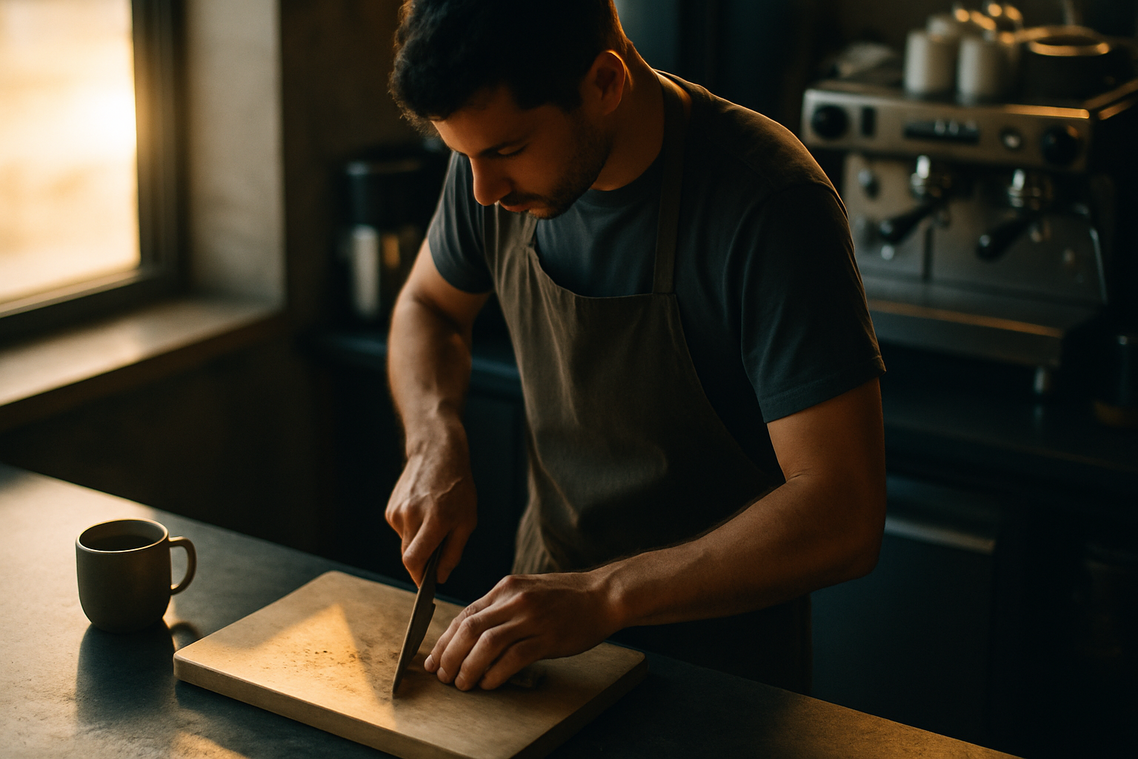
Mastering a few foundational cuts turns everyday prep into confident cooking. If you want cleaner presentation, even cooking, and less waste, focus on these essential knife skills and practice them deliberately.
-
How to Dice an Onion
Start by halving the onion through the root. Peel it, keeping the root intact (it holds everything together). Make radial cuts from root to tip, then slice horizontally toward the root. Finish with vertical slices to create even cubes. The onion won’t fall apart, and your dice will be uniform. Some argue you can skip the horizontal cuts—but that shortcut often leads to uneven chunks (and uneven cooking). -
Breaking Down a Bell Pepper
Slice off the top and bottom. Stand the pepper upright, cut down one side, and roll your knife along the inner wall to remove the core in one motion. You’ll have flat panels ready to julienne or dice. It’s faster and safer than digging out seeds piece by piece. -
The Chiffonade for Leafy Greens and Herbs
Stack leaves like basil or spinach, roll them tightly, and slice thinly into ribbons. This technique prevents bruising and gives elegant texture. Think restaurant-level garnish (yes, like something off a cooking show finale). -
Handling Hard Root Vegetables
With carrots or sweet potatoes, cut a thin slice to create a flat base first. Stability equals safety. Then proceed with planks, sticks, or dice.
For even better results, pair these prep methods with heat control strategies from how to build flavor with proper sauteing techniques. Precision in prep plus proper sautéing? That’s a winning combination.
A sharp knife isn’t just about precision—it’s about safety. Think of it like car tires: alignment keeps you steady, replacement comes later. Honing realigns a sharp edge (do it often), while sharpening removes metal to create a new edge (do it rarely). Confusing the two is like rotating tires when you actually need new ones.
Honing, Cleaning, and Storage Basics
First, hold your honing steel at a steady 15–20° angle. Then, with light strokes, sweep the blade down and across—let the steel guide you, not force you. In addition, hand-wash and dry immediately; water is rust’s best friend. Finally, store knives in a block or on a magnetic strip to protect the edge—and your fingers. Mastering these habits elevates your essential knife skills.
Mastering essential knife cuts not only elevates your cooking skills but also streamlines your meal prep process—making it easier to implement the 7 Smart Meal Prep Strategies for Busy Professionals.
From Chore to Craft: Keep Your Blade Moving
You came here to move from hesitant prep work to real confidence in the kitchen—and now you have the tools to do exactly that. With the foundational skills to handle 90% of everyday cutting tasks, you can replace uneven, time‑consuming chopping with smooth, controlled precision. That frustration you once felt at the cutting board doesn’t have to follow you into another meal.
The key now is action. Choose one technique—like dicing an onion—and practice it repeatedly until it feels natural. Consistency turns knowledge into instinct.
Don’t let slow prep hold your cooking back. Sharpen your skills, practice today, and transform every meal from routine to remarkable.